Bulk binds advantages, PL-SQL Programming

Assignment Help:

Bulk Binds advantages

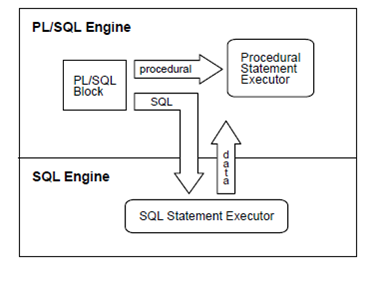
In the Embedded Oracle RDBMS, the PL/SQL engines accept any valid PL/SQL subprogram or block. As the figure shows, the PL/SQL engine executes all procedural statements but sends SQL statements to the SQL engine that executes the SQL statements and, in many cases, returns the data to the PL/SQL engine.
1509_bulk bind advantage.png

Figure: Context Switching

Each of the context switches between the PL/SQL and SQL engines adds to the overhead. Therefore, if many switches are needed, the performance suffers. That can happen when the SQL statements execute inside a loop using the collection (nested table, index-by table, varray, or the host array) elements as the bind variables. For e.g., the DELETE statement below is sent to the SQL engine with each and every iteration of the FOR loop:

DECLARE

TYPE NumList IS VARRAY(20) OF NUMBER;

depts NumList := NumList(10, 30, 70, ...); -- department numbers

BEGIN

...

FOR i IN depts.FIRST..depts.LAST LOOP

...

DELETE FROM emp WHERE deptno = depts(i);

END LOOP;

END;

In such cases, when the SQL statement affects five or more database rows, the use of bulk binds can improve the performance significantly.


Related Discussions:- Bulk binds advantages

Assignment of DBMS in SQL server, i have an assignment of DBMS subject, thi...

i have an assignment of DBMS subject, this assignment is based on SQL server and power BI

Procedures in pl/sql, Procedures   The procedure is a subprogram which...

Procedures   The procedure is a subprogram which performs a specific action. You write procedures using the syntax as shown below: PROCEDURE name [(parameter[, parameter, .

Overloading method in pl/sql, Overloading: Similar to packaged subprog...

Overloading: Similar to packaged subprograms, methods of the same type can be overloaded. That is, you can use similar name for various methods if their formal parameters diff

Using operator deref - manipulating objects in pl sql, Using Operator DEREF...

Using Operator DEREF: You cannot navigate through refs within the PL/SQL procedural statements. Rather than, you should use the operator DEREF in the SQL statement. The DEREF

Updating by replacement, Updating by replacement Syntax: UPDAT...

Updating by replacement Syntax: UPDATE ENROLMENT SET Name = 'Ann' WHERE StudentId = SID ('S1'); Note the use of SET, as already noted in connection with direct a

Parameter and keyword description - exit statement, Parameter and Keyword D...

Parameter and Keyword Description: EXIT: An unconditional EXIT statement (i.e., one without a WHEN clause) exits the present loop instantly. The Execution resumes with th

Is null operator-comparison operators, IS NULL Operator The IS NULL oper...

IS NULL Operator The IS NULL operator returns the Boolean value TRUE whenever its operand is null or FALSE if it is not null. The comparisons including the nulls always yield NU

Anatomy of a command, Anatomy of a Command Figure, showing a simple S...

Anatomy of a Command Figure, showing a simple SQL command, is almost identical to its counterpart in the theory book. The only difference arises from the fact that SQL uses a

Calling constructors in pl sql, Calling Constructors: The Calls to a c...

Calling Constructors: The Calls to a constructor are allowed wherever the function calls are allowed. Similarly to the functions, a constructor is called as a section of an ex

Raise_application_error, Raise_application_error -  procedure of package D...

Raise_application_error -  procedure of package DBMS_STANDARD , allows to issue an user_defined error messages by stored sub-program or database trigger.

Write Your Message!

Captcha
Free Assignment Quote

Assured A++ Grade

Get guaranteed satisfaction & time on delivery in every assignment order you paid with us! We ensure premium quality solution document along with free turntin report!

All rights reserved! Copyrights ©2019-2020 ExpertsMind IT Educational Pvt Ltd