Work and energy, Physics

Assignment Help:

WORK AND ENERGY


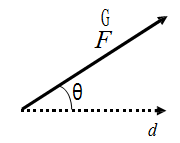
1.  Work can be defined as: the force applied in direction of displacement ×.  This means that if the force F acts at an angle θ with respect to the direction of motion, then 

      →   →

W = F ⋅ d = Fd cosθ
1233_work energy.png

2.  a) Work is the scalar quantity - it has magnitude but no direction.

b) The dimensions of the  work are: M × (L T -2 ) × =  M L2T -2


c) The units: 1 Newton × 1 Metre =  1 Joule (J)


3.  Suppose you lift the mass of 20 kg from a distance of 2 metres. Afterwards the work you perform is 20 kg × 9.8 Newtons × 2 metres  = 39.2 Joules. Conversely, the force of gravity is directed opposite to the force exerted by you and the work done by gravity is - 39.2 Joules.


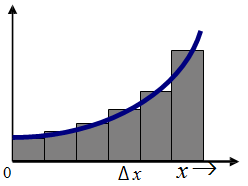
4. What if the force differs with distance (as we pull the spring harder as it becomes longer). In such case, we should break up distance over which the force acts into small parts so that the force is approximately constant over each bit. As we create the pieces smaller and smaller, we will attain the exact result:

0
90_work energy2.png

Now add up all the little pieces of work:

1863_work energy1.png

To get the exact result let Δx → 0 and the number of intervals N

7.  Energy is the capacity of a physical system to perform work:

?    it comes in various forms - mechanical, nuclear, chemical, electrical,  etc

1)   it can be stored

2)   it can be converted into different forms

3)    it can never be created or destroyed


Related Discussions:- Work and energy

Combined field due to the earth and a bar magnet, Where do you find the nul...

Where do you find the null points in the combined field due to the earth and a bar magnet, when i) the N-pole of the magnet is taken towards the north of the earth, ii) the

Describe binding energy, Describe binding energy. How does binding energy p...

Describe binding energy. How does binding energy per nucleon vary with mass number? What is it significance.

Watt, Watt; W (after J. Watt, 1736-1819): The derived SI unit of power...

Watt; W (after J. Watt, 1736-1819): The derived SI unit of power, explained as a power of 1 J acting onto a period of 1 s; thus it has units of J/s.

Determine the characteristics of the filter, 1. We want to measure a sinuso...

1. We want to measure a sinusoidal signal (frequency 100 Hz) expected to be of strength 1 mV RMS in the presence of noise of peak amplitude 3 mV.   (a) If our A/D converter has

Can a solid and liquid together be possible, Can a solid and liquid togethe...

Can a solid and liquid together be possible? Actually, substances can exist in all three states of matter concurrently if the conditions are right. The triple point of a substa

Evaluate refractive index of the material of the prism, Q. A prism is made ...

Q. A prism is made of glass of unknown refractive index. A parallel beam of light is incident on a face of the prism. The angle of minimum deviation is measured to be 40°.What is t

Parsec, parsec: The unit of distance explained as the distance mention...

parsec: The unit of distance explained as the distance mentioned by an Earth-orbit parallax of 1 arc sec. It equals approximate 206 264 au, or about 3.086 x 10 16 m.

Determine the entropy change, In this problem we will consider a vapor flui...

In this problem we will consider a vapor fluid interface on top of a solid surface.  A schematic is shown below: This is a zoomed-in picture of the edge of a liquid droplet

Write Your Message!

Captcha
Free Assignment Quote

Assured A++ Grade

Get guaranteed satisfaction & time on delivery in every assignment order you paid with us! We ensure premium quality solution document along with free turntin report!

All rights reserved! Copyrights ©2019-2020 ExpertsMind IT Educational Pvt Ltd