What is muscle tissue explain briefly, Biology

Assignment Help:

What is Muscle tissue explain briefly?

Remember that a skin cell, in addition to the genetic information that allows it to form into a skin cell, also has all of the genetic information that codes for muscle, nerve, and connective tissues, (cartilage, ligaments and tendons)! In other words, why don't skin cells also express these other genetic characteristics?
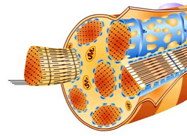
1407_Muscle tissue.png

Gene control in prokaryotes is primarily involved in the response to environmental stimuli such as nutrients and environmental, or physical, factors, such as temperature, moisture, and gases. On the other hand, the primary function of genes in multicellular eukaryotes is to produce many different kinds of cells, which have specialized roles.

Current scientific understanding of gene expression in a multicellular organism holds that cells develop differently from each other because they make and build up stores of different groups of RNA (transcription) and because they synthesize different protein molecules (translation). Note that the DNA itself is not altered or lost in the process.

So, basically what happens is that different types of cells make different sets of proteins! The distinctive protein makeup or configuration of a cell then determines what kind of cell it becomes and what it does. The job of controlling the production of the protein combination falls to molecules known as gene regulatory proteins and hormones.
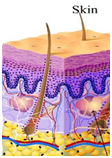
2488_Muscle tissue1.png

Control can take place at several different stages of protein synthesis, but the most common level of control is at the transcription level. Transcription, as you may recall, involves the building of a messenger RNA (mRNA) strand from the DNA template of nucleotides. Gene regulatory proteins can bind to specific DNA sequences to start the construction of an mRNA strand. This is known as a positive type of control mechanism, since it induces the production of proteins.

There are other methods of regulating the production of proteins, but these are not as prevalent as the control at the transcription level. These other controls involve stopping the transcription early on in the process, splicing mRNA molecules, cutting the RNA molecule, controlling the translation process, and the breaking down of unstable mRNA molecules.


Related Discussions:- What is muscle tissue explain briefly

What is coelom - body cavity explain, What is Coelom - Body Cavity explain?...

What is Coelom - Body Cavity explain? Among the bilaterally symmetrical organisms, animals have three different types of body plans with respect to body cavities. The term coel

Explain flavour binding - protein, Flavour Binding   Some   protein pre...

Flavour Binding   Some   protein preparations, although acceptable from a functional and nutritional stand point, necessitate  a deodorizing step to remove the bound off-flavor

How fever, How Fever,Illness,Infections,Injury affects the BMR? Any ill...

How Fever,Illness,Infections,Injury affects the BMR? Any illness or fever caused by an illness influences the metabolic rate. Fevers increase the metabolic rate by about 7% for

What is the antagonism of the sympathetic, What is the antagonism between t...

What is the antagonism between the sympathetic and the parasympathetic neural actions? In general the actions of the sympathetic and the parasympathetic are antagonistic, i.e.,

Phylum Protozoa, Summary of the Phylum and protozoa and the important

Summary of the Phylum and protozoa and the important

What is the function of the flagellum of the sperm cell, What is the functi...

What is the function of the flagellum of the sperm cell? How is it formed? The flagellum of the sperm cell is produced by the centrioles that migrate to the region posterior to

Cell theory, Cell theory is one of the four (or five) unifying concepts in...

Cell theory is one of the four (or five) unifying concepts in the biology. The cell theory states that all the living things are composed of at least one cell and that cell is the

What are the cytoplasmic inclusions, Q. What are the cytoplasmic inclusions...

Q. What are the cytoplasmic inclusions? Cytoplasmic inclusions are cytoplasmic molecular aggregates, such as organic polymers, pigments and crystals. They are not considered ce

Zoonoses disease- colibacillosis, Colibacillosis Colibacillosis is caused ...

Colibacillosis Colibacillosis is caused by different strains of Escherichia coli. The disease mainly affects children and travelers. Organisms grow in gut and produce toxin. It ma

Write Your Message!

Captcha
Free Assignment Quote

Assured A++ Grade

Get guaranteed satisfaction & time on delivery in every assignment order you paid with us! We ensure premium quality solution document along with free turntin report!

All rights reserved! Copyrights ©2019-2020 ExpertsMind IT Educational Pvt Ltd