Network for Digital Methods in the Arts and Humanities:
Europe has seen a signifi cant investment in the digitisation of its cultural heritage as part of the worldwide establishment of large-scale digital libraries and collections now available to researchers across disciplines. Digital content is transforming scholarship and research by:
• Creating greater access to materials to remote and disparate audiences around the world
• Enabling new modes of scholarly collaboration and communication, as well as interaction with content
• Enabling new methods of humanities research supplementing existing methodological approaches
• Facilitating the type of research that changes paradigms of understanding and creates
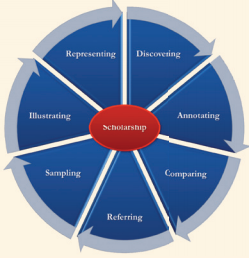
New knowledgeDigital collections and content, and the ICT (information and communications technology) methods and tools that scholars use for research in the digital environment, are the basis for innovative, collaborative and imaginative research thatwould otherwise be impossible, allowing scholars to ask new research questions, driven by insights that are only achievable through the use of digital technologies and collections. Existing research has also beenmade more effi cient through the use of ICT"The new research that has been enabled by ICT... has depended upon the development of new kinds of resources, such as large corpora in literary, linguistic, musicological, and television and fi lm studies domains, the digitization and digital-encoded representation of materialsin classics, history, literature and history of art, and the creation of databases in archaeology and the performing arts. This recognition that the future generations of scholarship in the arts and humanities will depend upon the accessibility of a vast array of digital resources in digital form is becoming more widespread" (S. Hockey and S. Ross, Review of the AHRC ICT Methods Network, 2008)ICT methods are used for the "scholarly primitives" 1 of research in the arts and humanities: discovering, annotating, comparing, referring, sampling, illustrating, and representing digital content:
ICT methods can be found at a key point of intersection between disciplines, collections and researchers: data-rich disciplines, such as archaeology, library and information science, and musicology, have refi ned new ICT methods; and within the data-driven sciences research methods have emerged around data and information processes. The use of advanced ICT methods can have signifi cant benefi ts in arts and humanities scholarship: they can enhance existing research methods; enable new research methods.