Long-term follow-up results , Biology

Assignment Help:

Long-term Follow-up Results :  To evaluate the long-term results of surgery, one has to take into consideration the natural history, results of medical treatment and that of PTCA. The main factors to be considered are: (1) number of vessels affected and the site of obstruction, (2) LV function, (3) severity of reversible ischnemia, and (4) previous history of myocardial infarction. control or risk factors like hypertension, diabetes, hyperlipidemia and obesity also plays important role, In the earlier years when only saphellous vein grafts were used, further interventions were required in about 50 per cent of cases at the end of ten years.

Currently non-usage of LIMA is taken to be a risk factor: Patients who had total artierial revascularisation (TAR) have lesser symptoms, require less number of revascularisation, and have better life style and survival.

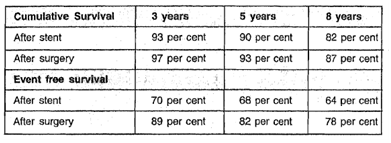
There are many studies comparing long-term results of' CABG Vs ITCA and stenting.
9_table.png

From this study it is obvious that survival is better and less number of reinterventions is required after surgery.

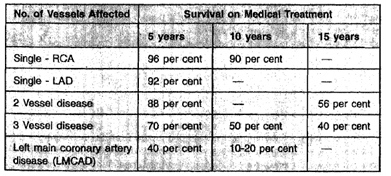
This can be compressed with the results of medical treatment done in the earlier years of coronary artery surgery.
1055_table1.png

This is the Veterans administration co-operathe study (VACOOP study), which consulted that in left main coronal artery disease and triple vessel disease, surgery is definitely indicated because the results of medical treatment


a . poor.


Related Discussions:- Long-term follow-up results

What is the vector of malaria, What is the vector of malaria? How different...

What is the vector of malaria? How different is its behavior from the behavior of the vector of dengue fever? The vector of malaria is a mosquito of the genus Anopheles, also k

Embryology in relation to taxonomy, Q. Embryology in relation to taxonomy? ...

Q. Embryology in relation to taxonomy? Embryological information has been used for taxonomic purposes at various levels of classification. You know of a very basic division of

What do you mean by primary metabolites, Q. What do you mean by Primary Met...

Q. What do you mean by Primary Metabolites ? As the name indicates, primary metabolites are molecules involved in vital metabolic pathways. They are of universal occurrence and

Protozoa, What are the disadvantages of protozoa

What are the disadvantages of protozoa

Adverse effects, Hypotension, hyperkalemia, taste disturbance, angiedema, r...

Hypotension, hyperkalemia, taste disturbance, angiedema, renal insufficiency. In the absence of any symptoms of hypotension, and normal renal function and K + levels, the dosage

Peroxisomes and glyoxysomes, PEROXISOMES AND GLYOXYSOMES Certain small ...

PEROXISOMES AND GLYOXYSOMES Certain small ovoid  unit membrane bound  sac like  cytoplasmic  organelles, resembling  lysosomes in size  and appearance  were  isolated  from var

Define the uses of foams, Define the uses of foams The foams frequently...

Define the uses of foams The foams frequently used in cookery are whipped cream, ice cream, cake, bread, meringues, milk froth and gelatin.  Food foams contain large amounts of

Show the ploidy of life cycles, Q. For each of the three kinds of life cycl...

Q. For each of the three kinds of life cycles what is the respective ploidy of the individual that represents the adult or lasting form? In the haplontic haplobiontic life cycl

What is risk factor interaction, What is risk factor interaction ? Coro...

What is risk factor interaction ? Coronary artery disease, as has been explained, is a multifactorial disease with diverse risk factors coming together and interacting to produ

Write Your Message!

Captcha
Free Assignment Quote

Assured A++ Grade

Get guaranteed satisfaction & time on delivery in every assignment order you paid with us! We ensure premium quality solution document along with free turntin report!

All rights reserved! Copyrights ©2019-2020 ExpertsMind IT Educational Pvt Ltd