Circularly linked lists implementation, Data Structure & Algorithms

Assignment Help:

CIRCULARLY LINKED LISTS IMPLEMENTATION

A linked list wherein the last element points to the first element is called as CIRCULAR linked list. The chains do not specified first or last element; last element does not have the NULL pointer. The external pointer provides reference to starting element.

The possible operations on a circular linked list are following:

Ø  Insertion,

Ø  Deletion, and

Ø  Traversing

Figure indicates a Circular linked list.
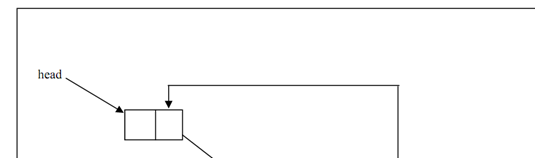
1176_CIRCULARLY LINKED LISTS IMPLEMENTATION.png

Figure: A Circular Linked List

Program indicates the creation of a Circular linked list.

#include

#include

#define NULL 0

structlinked_list

{

int data;

structlinked_list *next;

};

typedefstructlinked_listclist;

clist *head, *s;

void main()

{

voidcreate_clist(clist *);

int count(clist *);

void traverse(clist *);

head=(clist *)malloc(sizeof(clist));

s=head;

create_clist(head);

printf(" \n traversing the created clist and the starting address is %u \n", head);

traverse(head);

printf("\n number of elements in the clist   %d \n", count(head));

}

voidcreate_clist(clist *start)

{

printf("input the element -1111 for coming out of the loop\n");

scanf("%d", &start->data);

if(start->data == -1111)

start->next=s;

else

{

start->next=(clist*)malloc(sizeof(clist));

create_clist(start->next);

}

}

void traverse(clist *start)

{

if(start->next!=s)

{

printf("data is %d \t next element address is %u\n", start->data, start->next);

traverse(start->next);

}

}

if(start->next == s)

printf("data is %d \t next element address is %u\n",start->data, start->next);


int count(clist *start)

{

if(start->next == s)

return 0;

else

}

return(1+count(start->next));


Related Discussions:- Circularly linked lists implementation

Complexity of an algorithm, An algorithm is a sequence of steps to solve a ...

An algorithm is a sequence of steps to solve a problem; there may be more than one algorithm to solve a problem. The choice of a particular algorithm depends upon following cons

Use of asymptotic notation in the study of algorithm, Q. What is the need o...

Q. What is the need of using asymptotic notation in the study of algorithm? Describe the commonly used asymptotic notations and also give their significance.

What are circular queues, What are circular queues?  Circular queue: St...

What are circular queues?  Circular queue: Static queues have a very large drawback that once the queue is FULL, even though we erase few elements from the "front" and relieve

Linked lists - implementation, The Linked list is a chain of structures whe...

The Linked list is a chain of structures wherein each structure contains data in addition to pointer, which stores the address (link) of the next logical structure in the list.

Financial index data analysis, need c++ algorithmic software program to der...

need c++ algorithmic software program to derive one numerical outcome from 10 levels of variables with 135 combinations cross computed

State the range of operation of abstract data type, State the range of oper...

State the range of operation of ADT Operations of the Range of T ADT includes following, where a, b ∈ T and r and s are values of Range of T: a...b-returns a range value (an

Array, how to define the size of array

how to define the size of array

EM13845162, Do you have a library solution for this problem?

Do you have a library solution for this problem?

Circular queues and implement circular queues using array, Explain what are...

Explain what are circular queues? Write down routines required for inserting and deleting elements from a circular queue implemented using arrays.           Circular queue:

Flowchart, conversion of centrigral to frahenhit

conversion of centrigral to frahenhit

Write Your Message!

Captcha
Free Assignment Quote

Assured A++ Grade

Get guaranteed satisfaction & time on delivery in every assignment order you paid with us! We ensure premium quality solution document along with free turntin report!

All rights reserved! Copyrights ©2019-2020 ExpertsMind IT Educational Pvt Ltd