Effective branching rate - heuristic searches, Computer Engineering

Assignment Help:

Effective Branching Rate:

Assessing heuristic functions is an important part of "AI" research: a particular heuristic function may sound such a good idea, but in practice give no discernible increase in the quality of the search. Search quality can be estimated experimentally in terms of the output from the search, so by using various measures such as the effective branching rate. Let suppose a particular problem P has been solved by search strategy S by expanding N nodes, and the solution play at depth D in the space. Then the effective branching rate of S for P is calculated by comparing S just to a uniform search U. The other example of a uniform search is a breadth first search where the number of branches from any node is always the same (as in our baby naming example). After that we suppose the (uniform) branching rate of U is like that, on the exhausting its search to depth D, it too would have expanded exactly N nodes. That should be imagined branching rate, written b*, is the effective branching rate of S and is calculated thus:

N = 1 + b* + (b*)2 + ... + (b*)D.

Rearranging this equation will give a proper value for b*. For example if we considered that we taken from Russell and Norvig rule, suppose S finds a solution at depth 5 having expanded 52 nodes. As in the above this case:

52 = 1 + b* + (b*)2 + ... + (b*)5.

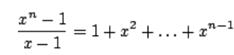
and it turns out that b*=1.91. To calculate this, we can use the very well known mathematical character:
362_Effective Branching Rate.png
This enables us to write a polynomial for which b* is a zero, and we can solve this using numerical techniques like Newton's method.
It is normally the case that the effective branching rate of a search strategy is similar over all the problems. It is may be used for, so that it is acceptable to average b* over a small set of problems to give a valid account. If there is a heuristic search has a branching rate near to 1, then this is a good sign. We state that one heuristic function h1 dominates another h2 if the search using h1 always has a lower effective branching rate than h2. Having a lower effective branching rate is clearly desirable because it means a quicker search.


Related Discussions:- Effective branching rate - heuristic searches

What is master slave kernel, Q. What is Master slave kernel? Master sl...

Q. What is Master slave kernel? Master slave kernel: In this model just one of processors is assigned as Master.  The master is in charge for subsequent activities:  i)

Illustration of instruction format, Let's provide you a fundamental illustr...

Let's provide you a fundamental illustration by which you may be able to define the concept of instruction format.  Let us consider the instruction format of a MIPS computer. MI

How do we prevent selected parameters of a module, How  do  I  prevent  sel...

How  do  I  prevent  selected  parameters  of  a  module  from  being  overridden  during instantiation? If a specific parameter within a module must be prevented from being ov

What is meant by hide area, What is meant by hide area? The hide comman...

What is meant by hide area? The hide command temporarily kept the contents of the field at the present line in a system-controlled memory called as the HIDE AREA.  At an intera

Determine the level of state decomposition, Determine the level of state de...

Determine the level of state decomposition The level of state decomposition must be determined by judgement. A too fine grained model is unsuitable, such as, modelling all poss

What is the purpose of the cpu, Problem 1 a) What is the purpose of th...

Problem 1 a) What is the purpose of the CPU and what can the CPU perform. b) Name the two most common types of software and briefly illustrate each one. c) The CPU con

Explain pass-1 algorithm of passes used in two-pass-assemble, Explain pass-...

Explain pass-1 algorithm of passes used in two-pass assembler? Pass I: (i) Separate the symbol, operand fields and mnemonic opcode (ii) Make the symbol table (iii)

There no polymorphic-type response, Why is there no polymorphic-type respon...

Why is there no polymorphic-type response from a create() or find() method? Ans) The EJB Specification forbids this behavior, and the weblogic.ejbc compiler checks for this beha

Give explanation about stored program control, Give explanation about Store...

Give explanation about Stored Program Control. Stored Program Control: In this centralized control, all the control equipment is replaced through a single processor that must

Write Your Message!

Captcha
Free Assignment Quote

Assured A++ Grade

Get guaranteed satisfaction & time on delivery in every assignment order you paid with us! We ensure premium quality solution document along with free turntin report!

All rights reserved! Copyrights ©2019-2020 ExpertsMind IT Educational Pvt Ltd