A Student's Guide to Apply Semantic Analysis Techniques to Build a Feature Matrix in 2026
Semantic analysis techniques increase the comprehension and vocabulary skills of the students. In this guide, you will learn how to create a perfect semantic feature matrix in just 5 simple steps + some advanced tips for semantic feature analysis.

Have you ever experienced that being a student, you struggle to grasp a concept in class, especially when the tutor covers multiple topics? This issue arises when you are unaware of the core abstractions of these topics.
When you don't have a strong command of the subject, you will likely be incapable of understanding the advanced courses. As a result, you will not be able to give in-depth answers and will show a lack of authority on the subject matter.
However, this issue can easily be resolved with the help of a semantic analysis technique. As compared with tools like Venn diagrams, a semantic matrix provides a more in-depth and structured learning experience.
Note: Research analysts from The Academic Papers UK, a top dissertation writing service UK, collaborated on this guide to help you create a semantic matrix in five practical, easy-to-follow steps.
Key Points to Remember
-
A semantic feature matrix is used to visually organise semantic data..
-
The semantic analysis technique improves the key concepts of the students, which enhances their cognitive learning and sharpens their decision-making skills.
-
Always choose a broader topic for a semantic feature analysis to get better results..
-
Make a grid and visualise the key features of the topic. Complete the matrix or grid via healthy discussions with your colleagues.
-
Finally, analyse with an expert to ensure clarity on the core concepts.
What are the Semantic Analysis Techniques for Students and Their Benefits?
A semantic feature matrix, or semantic feature analysis (SFA), is a grid used to visually organise the key concepts of a topic. This grid lets you understand the relation between a set of items, based on their shared characteristics.
For example, you can create a visual map of mammals and classify different mammalian animals on the basis of their similarities. In this way, you can understand the nuances of a topic.
Here are some benefits of the semantic feature matrix:
-
Semantic analysis helps you to improve your vocabulary skills. According to research by the University of Zakho, SFA positively affects students' awareness and learning skills.
-
It improves students' comprehension capabilities and they can understand the concepts in a better way.
-
You can master important concepts using a semantic feature matrix and understand the links between conceptually similar concepts.
-
Based on the connections between different concepts, you can even make predictions.
Step-by-Step Guide on How to Create a Perfect Semantic Feature Matrix
You can create a perfect semantic feature matrix by using a grid. Here are 5 steps on how you can make your own semantic feature matrix:
Step 1: Choose Your Topic
For any semantic analysis techniques, the most important part is to find the topic. Here is a quick tip. Choose a topic that is hard to digest and you want to break it down to understand other concepts.
Let's say you are unable to grasp the concept of mammals. In that case, you can select a topic like "What are the Common Mammals in Asia?" This way, you can not only be able to create a matrix grid, but you will also take a deep interest in learning.
Tips to Choose Your Topic for the Semantic Feature Matrix
Here are some tips for you to choose the next topic for the semantic feature matrix:
-
Understand your key area of interest and choose a topic that all or the majority of the class is ready to participate in.
-
Select a topic that aids you in improving your core or threshold concepts. For instance, choose a topic like "features of mammals" to ensure you have a complete grip on mammals before going with broader topics like "what are common mammals in Asia?"
-
You can also conduct a pilot study. Ask a few of the most affected fellows about the ways to improve their topic clarity and effectiveness on the subject.
-
Always use diverse, multiple samples for different topics. In this way, you can erase biases in semantic analysis techniques that are more compatible with all of the students.
-
Ask open-ended questions during topic selection. For example, questions like "which mammal flies and also lays eggs" help you understand different variations in the mammalian family.
Step 2: Brainstorm & Select Key Features
Once the topic is selected, the next step is to brainstorm different key features related to your question of interest. A better way is to engage all of the group members in finding the key features related to the topic.
For example, for the topic "What are the key features of mammals?" you can devise different questions and ask the group. Some common types of questions could be:
Such questions may only address the surface-level concerns, but they are good for building a base. A key thing to remember is that subject-matter expertise is critical here. Any person who already has an understanding of the topic can brainstorm better ideas.
Tips to Brainstorm Features
-
Make a list of 2-3 features and then try to create more related features.
-
Choose features that have variations. This step will assist you in making a helpful comparison.
-
Make sure that the selected features are not very broad and are specific to the topic, so your group members can easily relate them to the topic.
-
Use opinion writing prompts in case you or your writers are facing writer's block while brainstorming. These will give you direction while doing your research.
Step 3: Make a Grid
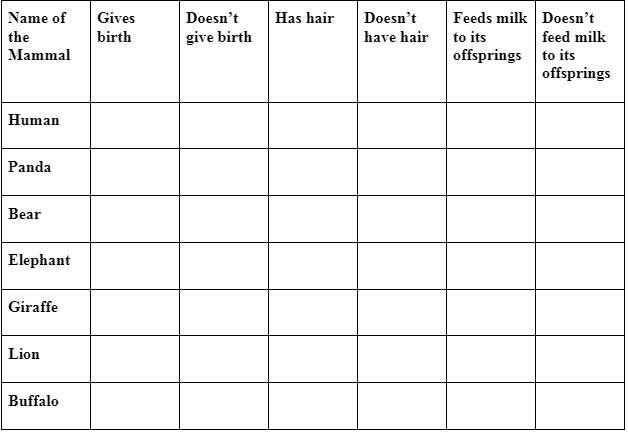
A grid is a visual arrangement of a topic or question and its key features of semantic analysis techniques. A standard semantic grid lists all the key features on one side with empty boxes. Members can use these boxes to interact with the features. If you have multiple features, you can arrange them on both axes of the chart.
The table below illustrates an example of a semantic feature matrix chart:
Tips to Write a Good Semantic Feature Matrix
Here are some tips for you to create a good semantic feature matrix:
-
List the vocabulary words or main topic on the left side of the chart. Write the relevant features at the top of the chart.
-
Use "+, -" signs to mark the words. '+' sign when a word aligns and '-' sign when a feature contradicts the main topic. Use '?' when the answer is complicated or to start a debate.
-
Use a downloadable grid template available online so that you can easily understand what a chart is and how to mark it.
-
Utilise one member as a model. Ask him to fill one row or column and let the others follow the example. In this way, the entire class will eagerly participate in the discussion.
Step 4: Complete the Matrix Through Research & Discussion
The discussion part initiates once you have finalised the semantic analysis techniques. During this active learning phase, try to engage with others to find better answers. In fact, this is a quality assurance part to ensure that your chart is good enough and supports all the arguments.
Here is how you should engage all to complete the matrix:
-
Team up with classmates: Create multiple groups of team members and ask them to complete the matrix through discussion. Make jigsaw groups where each member is an expert and shares their opinions freely.
-
Do your own quick research: Look online for reputable sources such as research papers, notes, or reliable sites to find answers quickly. Provide the material to others for quick completion of the task.
-
Initiate the debates: Ask multiple and open-ended questions to spark debates among your members. This activity helps them clear the concepts and strengthen their grip on the topic.
-
Learn from the right answers: Appreciate the members with the right answers and tally them with your findings. Discuss different views freely to clear your confusion.
Step 5: Analyse the Matrix and Apply the Findings
In the final step, analyse the matrix by discussing it with the other members. You can even take online help to finalise the final assessment step. This is the most important part and its purpose is to tell the students that thinking is the end goal, not filling the matrix.
Benefits of Semantic Feature Analysis (SFA)
The following are the benefits of semantic feature matrix analysis:
-
This step clears the doubts in your mind. It also answers the unresolved questions.
-
Analysis of the semantic feature matrix also improves cognitive learning. According to research from the University of Tulsa, SFA not only improves processing but also enhances semantic relationships.
-
Semantic analysis techniques also improve the pattern recognition among students. Using this skill, they can learn new skills and make better decisions.
-
Using SFA, you can find a common result that satisfies the entire class. In this way, you can grab the core concepts and nuances of the topic effectively.
-
Semantic feature matrix uses your previous academic knowledge and uplifts it further via discussions and healthy arguments.
Advanced Tips for Semantic Feature Analysis
The following are some pro tips to uplift semantic feature analysis:
1. Use of Digital Tools: Use modern tools like Canva to make better and more efficient semantic feature charts. These tools offer reliability and help you make better charts.
2. Bring Diversity and Variations: Always have diversity and variations in your semantic feature chart. In this way, you can broaden the learning circle and gain more knowledge.
3. Interactive Learning: Use visuals or debates to encourage interactive learning among your team members. Participation clears the basic concepts and also improves their communication skills.
4. Focus on Generalisations: Generalisations or real-life examples make you relate to the concepts. These examples ensure that your deep learning is beyond just the initial learning ecosystem.
Conclusion
Semantic analysis techniques are a visualisation strategy that helps readers show the relevance of the different words. This concept is used to encourage holistic learning in different students.
You can make a semantic feature matrix in just 5 simple steps. First, define a topic. Then, brainstorm to find the related vocabulary, like key features, for this topic. Then, make a grid and complete the matrix. In the last step, analyse the chart to conclude your findings.
Using a semantic feature matrix offers several benefits. It strengthens vocabulary and enhances comprehension skills. For students working on larger projects or research, combining this method with support from dissertation writing services can make complex topics easier to manage and present.
So, have you learned how to make a semantic chart for students? Apply now to see how it improves your learning.
Frequently Asked Questions about Semantic Analysis Techniques
1. What are semantic analysis techniques for Students?
Semantic analysis techniques for students is a skill that lets them explore different ideas, relate words with each other, and strengthen their core concepts. It also builds vocabulary and comprehension in the students. A semantic feature analysis chart consists of a vertical axis for related words or concepts, a horizontal axis for features, and a chart to mark the findings. Students can use symbols like "+ " and "-" to express their findings.
2. How to Use Semantic Feature Analysis for Language Learning?
To use SFA for language learning, pick a category/topic of a language and its key features. Organise these features along a grid and analyse them as a class. Use your analysis to develop an understanding of word meaning, semantic relationships, and core concepts. Plus, always go with a familiar category to take an easy start. It would be better if you could use multiple languages to broaden your learning. Additionally, use pictures for visual hints.
3. What is an Example of a Semantic Feature for Students?
An example of a semantic analysis technique for students is to compare the attributes of our solar system. Write the names of the planets on the left side in a column and their key features on the top row for comparison. Another example of a semantic feature for students is comparing the characteristics of different mammals. You can use the mammal classes on the left axis and their shared features on the top row.
4. What are the Key Elements of Semantic Feature Analysis?
The key elements of SFA are a grid, a main topic with its features, and the group review. The research and participation are the core pillars of semantic feature analysis. Apart from that, feature prompts like determinants are also used to express your feature analysis. For instance, you can use binary symbols for evaluations.